

Establishing a private clinic in Malaysia involves a well-defined regulatory process, overseen by the Medical Practice Control Section (CKAPS) of the Ministry of Health Malaysia. This guide will walk doctors and clinic owners through the necessary steps to ensure compliance with regulations, from business registration to obtaining the Certificate of Registration (COR) for clinic operation.
Preparation and Initial Setup
The first step in establishing a private clinic is to carefully choose the clinic’s name. The name must reflect the nature of your practice while adhering to the guidelines set forth by local authorities.
It is important to ensure that the chosen name does not conflict with any other existing businesses and remains professional in nature. A clinic’s name is often its first impression to the public, so it is advisable to select one that is memorable yet appropriate to your services.
Once the name is selected, the clinic must be registered as a legal business entity with the Companies Commission of Malaysia (SSM).
Depending on the nature of the clinic, you can register it under one of the available structures, such as a sole proprietorship, partnership, company limited by shares, or as a limited liability partnership (LLP). Compliance with the Companies Act 2016 or the Limited Liability Partnership Act 2012 is mandatory.
This registration not only legalises the clinic but also allows it to operate as a formal business entity within the Malaysian healthcare framework.
Securing a suitable premise for your clinic is a crucial step. The selected location must meet zoning regulations and be conducive to operating a healthcare facility. Additionally, the building must have a valid Certificate of Completion and Compliance (CCC) or a Certificate of Fitness (CF) to ensure that it is safe for occupancy and use as a clinic.
If you are renting the premise, make sure to have a duly signed tenancy agreement in place.
Designing the layout of the clinic is another significant aspect of the preparation process. You are required to prepare a detailed floor plan, drawn to a scale of 1:100, which showcases all the essential areas such as consultation rooms, a pharmacy, waiting areas, and emergency exits.
This floor plan must comply with the Ministry of Health’s standards for safety and functionality. Attention to detail during this stage is vital as the layout must allow for an efficient flow of patients and staff, and ensure privacy and accessibility for everyone who visits the clinic.

Picture 1: Flow Chart from Guidebook on Setting Up and Running Private Medical Clinics in Malaysia.
Gathering the Required Documents
After the preliminary setup is completed, the next step involves gathering the necessary documents for the CKAPS application. One of the critical documents is a certified true copy of your Annual Practicing Certificate (APC), which must clearly state the name and address of the clinic to be registered.
If your APC currently reflects a different address or another clinic, you will need to apply for an amendment before proceeding.
Additionally, a Statutory Declaration (SD) signed by a Commissioner of Oaths is required. This declaration serves as a legal assurance that the applicant has not been convicted of any fraudulent activity and is not an undischarged bankrupt.
If the clinic is registered as a company, you must also provide corporate information from the Companies Commission of Malaysia (SSM), which includes certified copies of the company’s registration and corporate details.
Other essential documents include a copy of the building’s CCC or CF to verify the safety and legal compliance of the clinic premises, and a copy of the tenancy agreement if the building is rented. Finally, the prepared floor plan must also be submitted as part of your application.
Submitting the Application
With the documents ready, the next step is completing the registration application using Borang A. This form is available online and must be completed with accurate and up-to-date information.
Once completed, print the form and submit it, along with the gathered supporting documents, to the CKAPS office at the relevant State Health Department (Jabatan Kesihatan Negeri, JKN) or Wilayah Persekutuan (WP) office.
After submission, CKAPS will begin the review process. It is critical that all documents are complete and meet the necessary standards to avoid delays. If your application is complete and compliant, CKAPS HQ will issue a “No Objection” letter.
This letter officially permits you to proceed with the next steps of clinic preparation, particularly the renovation of your clinic premises according to the approved floor plan.

Picture 2: Form that can be downloaded from CKAPS website which is a checklist for all the documents needed for submission of Borang A.

Picture 3: Form that can be downloaded from CKAPS website which is a checklist for all the documents needed for submission of Borang A.
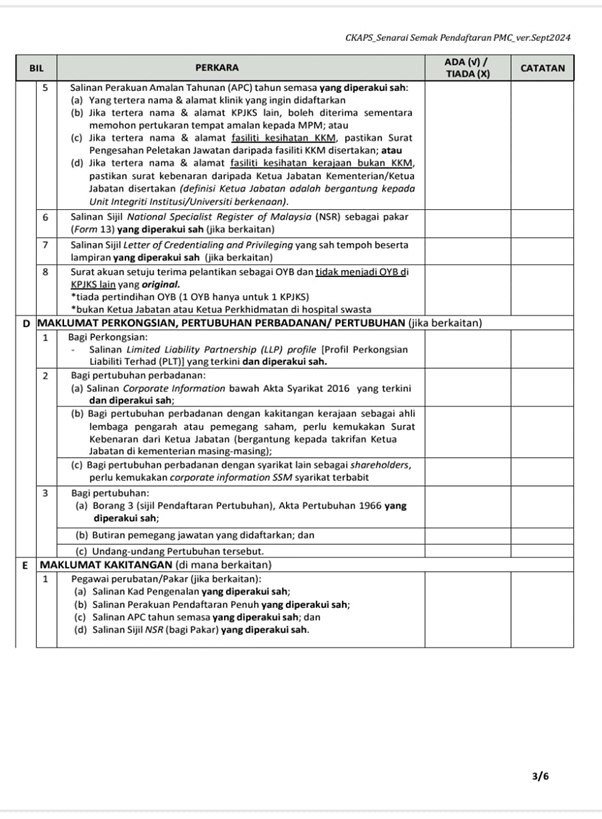
Picture 4: Form that can be downloaded from CKAPS website which is a checklist for all the documents needed for submission of Borang A.
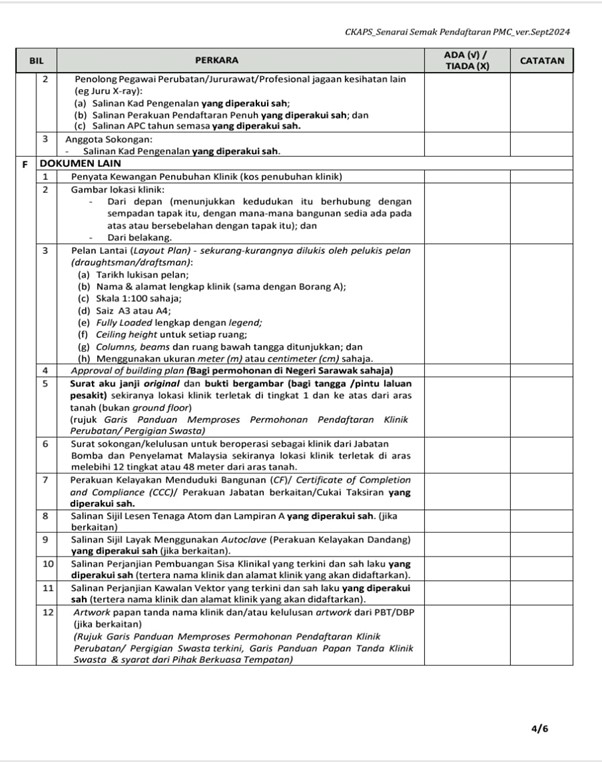
Picture 5: Form that can be downloaded from CKAPS website which is a checklist for all the documents needed for submission of Borang A.
Clinic Renovations and Compliance
Once the “No Objection” letter has been received, you may begin the renovations of the clinic. The renovation process must strictly follow the approved floor plan, ensuring that the design and layout meet the Ministry of Health’s regulatory standards.
During this stage, it is mandatory to engage licensed contractors, particularly for essential services such as clinical waste disposal and pest control. These contractors must be accredited to ensure that the clinic maintains hygienic and safe operations.
When renovations are complete, you will need to submit a Completion Report to CKAPS HQ, notifying them that the clinic is ready for a final inspection. This report acts as confirmation that the clinic is now prepared for official review and operation.
Inspection and Issuance of Certificate of Registration (COR)
Following the submission of the Completion Report, CKAPS will schedule a site inspection. This inspection is conducted to ensure that the clinic has been set up in accordance with the regulations and that all areas comply with safety, operational, and medical standards.
It is essential that everything is in order during this inspection, from the clinic layout to the placement of medical equipment and safety measures.
If the clinic passes the inspection, CKAPS HQ will issue a notice for the payment of the registration fee. Upon payment of the required fees – a processing fee of RM500 and an issuance fee of RM1,000 – CKAPS will issue the Certificate of Registration (COR).
This certificate officially permits the clinic to begin operations and should be prominently displayed within the clinic as proof of regulatory compliance.
Additional Licensing Requirements
In addition to the registration process, there are additional licences that may be required depending on the services offered by the clinic. For instance, if the clinic intends to use X-ray machines or other ionising radiation equipment, it is necessary to apply for a licence from the Bahagian Kawalselia Radiasi Perubatan (BKRP), a division within the Ministry of Health Malaysia.
Furthermore, a Signboard and Advertisement License must be obtained from the local authority. This licence allows you to display the clinic’s name and advertisements legally. It is important that all promotional materials comply with local regulations to avoid any legal issues in the future.
Clinical Waste Management
Effective clinical waste management is critical for maintaining the hygiene and safety of your clinic. It is mandatory to engage a licensed contractor for the proper disposal of clinical waste, in accordance with the Environmental Quality (Scheduled Wastes) Regulations. This regulation ensures that hazardous materials are safely managed and disposed of, protecting both the clinic staff and the environment.
Cost Considerations
Setting up a private clinic involves various costs beyond the initial application fees.
In addition to the processing fee of RM500 and the issuance fee of RM1,000 for the Certificate of Registration, clinic owners must account for additional expenses related to renovations, equipment, clinical waste management services, and licensing for X-ray machines or signage.
Renovation costs, in particular, can vary widely depending on the size and scope of the clinic. It is advisable to budget carefully and plan for these expenses in advance.
Read about Building A GP Clinic in Malaysia: A Step-by-Step Guide. There are total 4 parts to this guide. Also read about How Much Does It Cost To Build & Run A GP Clinic in Malaysia.
Check out the services and products that are available for GP doctors in the GP Clinic Solutions Hub .
The GP Solutions Hub is everything a doctor needs for building and running a GP clinic: services, clinic management software, financing, medications, equipment, articles, workshops, and more.