The scarcity of health economists is a reality in Malaysia. As stated earlier, in Malaysia’s cash strapped public healthcare system, doctors as health economists are all the more urgently needed to carry out cost effectiveness studies in a system that has opted to offer relatively free service to the public. Apart from cost effectiveness research, health economists also engage in cost minimization studies, cost-benefit studies, and cost-utility studies.
In addition, doctors’ education and clinical experience quite perfectly qualify them for the role of health economists. After all, health economists study topics which include health insurance markets, health disparities, health behavior, the global burden of disease, and common global health challenges such as water supply, sanitation and hygiene, nutrition, and HIV/AIDS etc.
This necessitates that a doctor as a health economist must possess thorough knowledge of economics and have a good understanding of political science, international relations, biostatistics, epidemiology, public health, and healthcare management. This implies that doctors must engage in voracious reading and take a post-graduate course or two. And this is to be expected when it comes to a career transition.
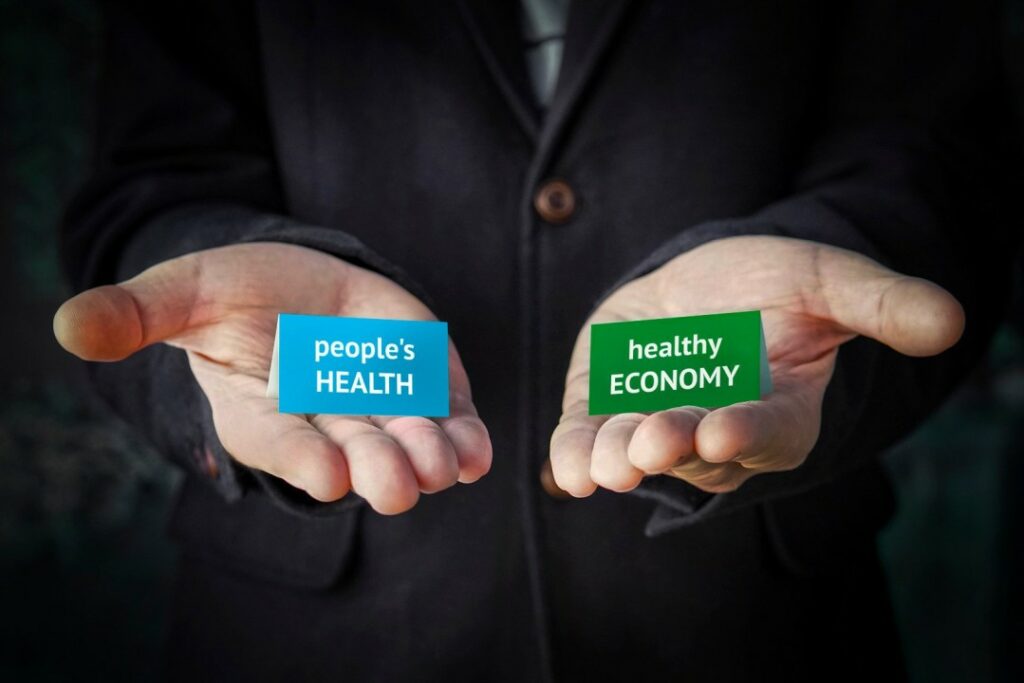
Economics is a study about trade-offs and never has there been a more glaring trade off than when the economy was traded off for the sake of public health in many countries around the world because of the Covid-19 pandemic. Hospitals, their manpower, and physical resources have been stretched to the limit. The cost of the pandemic upon the economy and healthcare is still being calculated and we’re not out of the woods yet!
Interestingly, the 21st Century has seen different viruses making their grand appearance resulting in the loss of lives and damage to economies . Among them are the Severe Acute Respiratory Syndrome (SARS), the H1N1 Influenza Pandemic, the Ebola Outbreak, and the Middle East Respiratory Sydrome (MERS). The Mother of them is of course the SARS Cov-2 Coronavirus disease.
To be honest, the Covid-19 pandemic has created an excellent job outlook for health economists. This is especially so as the fight against the Covid-19 pandemic must not merely take a public health perspective but also an economic perspective. The age of the pandemic/endemic is a compelling reason for doctors to be health economists.
Health economists are often found in universities, hospitals, health insurance companies, pharmaceutical manufacturers, government agencies, consultancy firms, and in public health be it local or international.
Governments need health economists to help them get the most out of the money spent on healthcare as well as to ensure justice and equity in the distribution of care to the poor. Ensuring justice and equity in the distribution of medical care to the poor is a vital reason for doctors to become health economists.
Health economists are very much needed in the pharma and health insurance companies to help ensure the right price setting for healthcare products and services. They are needed in deciding the right quantities of healthcare products and services to be manufactured, subject to the cost of production, of course.